ARTICLES
What’s the Best Stroller for Airplane Travel?
There’s no single “best” travel stroller - there’s the best one for how you actually fly. A grandparent making one trip a year has different needs than a family gate-checking a stroller every other weekend. This guide walks through what actually matters, then points to a few real strollers worth considering depending on your trip.

If you’ve ever stood at a gate juggling a car seat, a diaper bag and a stroller the size of a small couch, you already know why this matters. The right travel stroller for flying isn’t just lighter - it folds smaller, stands on its own, and doesn’t turn boarding into a wrestling match.
What actually makes a stroller “airplane friendly”?
Marketing copy loves the phrase “airplane friendly,” but only two numbers really decide whether a stroller fits in the cabin: its folded dimensions and its weight. A stroller can be light and still fold too wide for an overhead bin, and a stroller can be tiny folded and still be a pain to lug through a terminal at 12 lb versus 20 lb.
The other detail that separates a genuinely good travel stroller from a merely small one is how it folds. A one-hand fold matters when you’ve got a toddler on one hip. A stroller that stands up on its own once folded means you’re not hunting for a wall to lean it against while you dig out your boarding pass.
Overhead bin or gate-check? Know the difference before you buy
These are two very different trips. A stroller built for the overhead bin needs to hit a specific, small folded size - usually somewhere around 18 x 14 x 9 inches, though it varies by airline and even by aircraft. A gate-check stroller has much more room to work with, since it travels in the cargo hold and gets handed back to you at the jet bridge on arrival.
Here’s the part that trips people up: even a stroller that’s genuinely small enough for the overhead bin isn’t automatically guaranteed a spot there. Some airlines size-check strollers like any other carry-on; others direct you to gate-check collapsible strollers no matter how small they fold, regardless of what the box says. Checking your specific airline’s policy before you fly - not just the stroller’s marketing - is worth the two minutes it takes. If you already own a stroller and want to check its exact measurements against every major US and Canadian carrier at once, our Will It Fit tool does that side by side in a few seconds.
The features that matter more than the marketing
- Folded size, not just weight. A stroller’s width and depth folded usually matter more for cabin storage than the overall footprint - a stroller that’s an inch too wide won’t fit no matter how light it is.
- Recline. If naps happen on the move, a near-flat or full-flat recline matters a lot more once you’re three hours into a trip than it did in the store.
- One-hand, self-standing fold. You will be doing this one-handed, holding a child, more than once. A stroller that collapses with one pull and stands on its own is worth the extra effort to find.
- Suspension and basket space. Cobblestones, ramps and airport flooring aren’t always smooth, and a usable basket means you’re not carrying everything on your body through security.
- Newborn readiness, if you need it. Only count a stroller as newborn-ready if the manufacturer includes a specific setup for it - a bassinet, a baby net or a proper flat recline - not just a vague “from birth” claim.
A few real picks, by what you actually need
Smallest possible fold: CYBEX Libelle
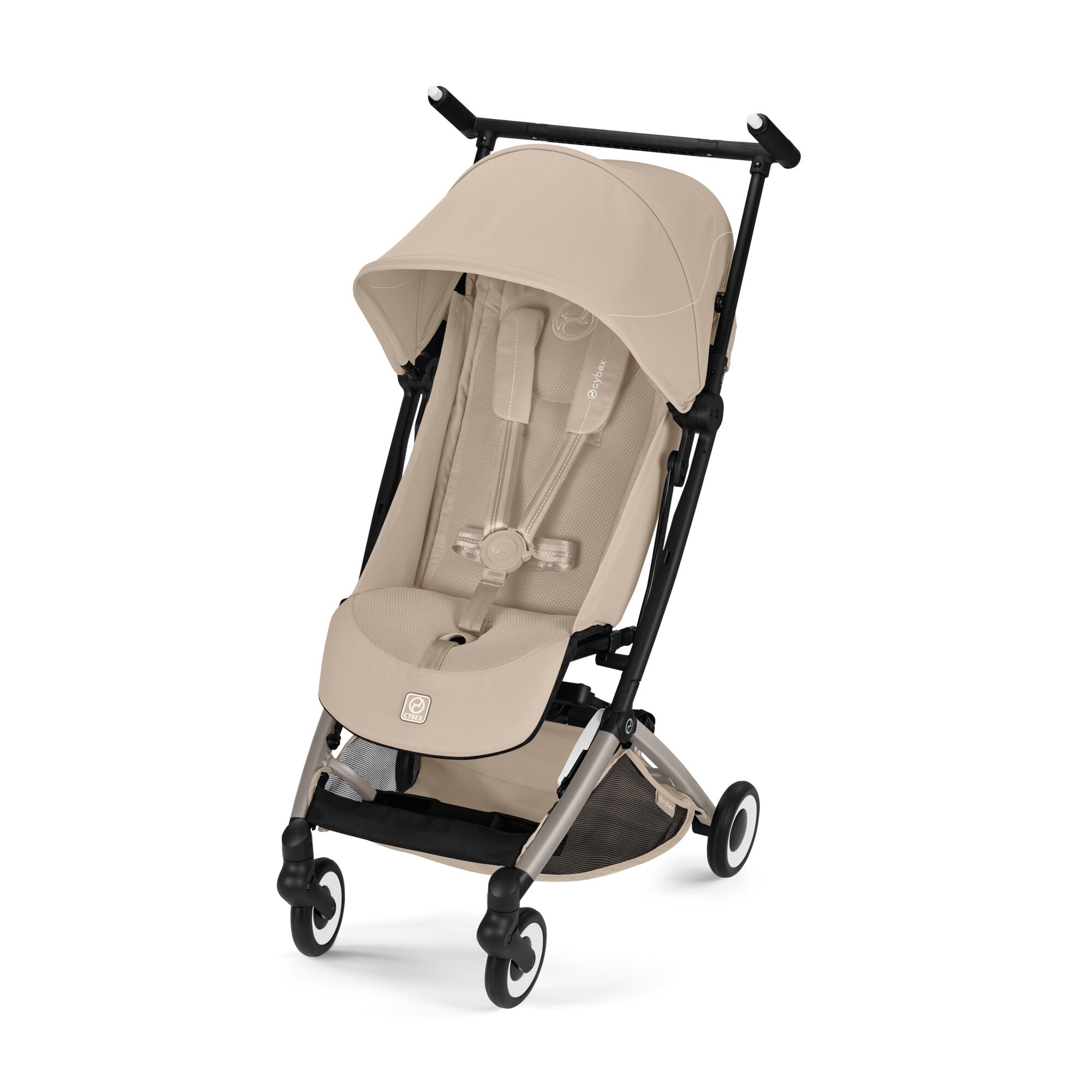
At 13.7 lb and folding to a genuinely tiny 12.6 × 7.8 × 18.9 in, the CYBEX Libelle is built around one job: being as small as possible. The tradeoff is that its seat is rated from 6 months, not birth, so it’s a better fit once your baby is a little older.
One stroller from newborn through preschool: Joolz Aer²

The Joolz Aer² ships with a baby net for newborn use right in the box, and its recline goes all the way flat - a real difference if naps are part of the trip. At 14.3 lb with a one-hand, self-standing fold and all-wheel suspension, it’s built to be the only stroller you own, not just the one you save for trips.
Lightest for a quick trip: gb Pockit Air All-Terrain

If the priority is simply carrying as little as possible through the airport, the gb Pockit Air All-Terrain weighs just 10.4 lb and folds down to a handbag-sized package. It’s a minimalist choice - don’t expect a plush ride - but for occasional flyers who mostly need something small and cheap to grab for a trip, it’s hard to beat on weight and price.
Happy to gate-check, want the plush ride: Nuna TRVL lx

Not everyone is chasing the smallest possible fold. The Nuna TRVL lx folds considerably larger than the cabin-focused options here, but it makes up for it with front-and-rear suspension and a built-in carriage mode for newborns. If you’re fine gate-checking and want the ride quality closer to your everyday stroller, this trades cabin-bin ambitions for comfort.
Want to see these side by side with the rest of the field? Our comparison tool lines up specs, price and airline fit for any strollers you’re deciding between.
A few tips for actually getting through the airport
- Tag it at check-in if you’re gate-checking. Most airlines hand out a gate-check tag at the counter or the gate itself - ask early so you’re not doing it at the last minute.
- Fold it before you reach security. Lines move faster when your stroller is already collapsed and through the X-ray, rather than folded one-handed while everyone waits.
- Keep the basket light for the fold. A stuffed basket can make even a good one-hand fold clumsy - move heavier items to your bag before you collapse it.
- Know your specific aircraft, not just your airline. The same airline can fly different aircraft with different overhead bin sizes on different routes, so a stroller that fit last time isn’t a guarantee.
Let us help you find yours
If you’d rather answer a few questions about your trip than compare specs manually, our six-question finder shortlists real strollers based on your child’s age, your budget and how you’re actually flying - and shows the tradeoffs honestly instead of pretending there’s one perfect stroller for everyone.