ARTICLES
Can You Take a Stroller on a Plane or Do You Have to Check It?
Short answer: yes, you can usually take a stroller with you when you fly. Whether it goes in the cabin, gets gate-checked, or has to be checked at the ticket counter depends on the stroller, the airline, the aircraft and the available space on the day.
If you’re traveling with a baby or toddler, that distinction matters a lot. There’s a big difference between walking through the airport with your child comfortably strapped into a stroller until boarding, and handing over an expensive stroller at check-in, then carrying a tired toddler through three terminals during a connection.
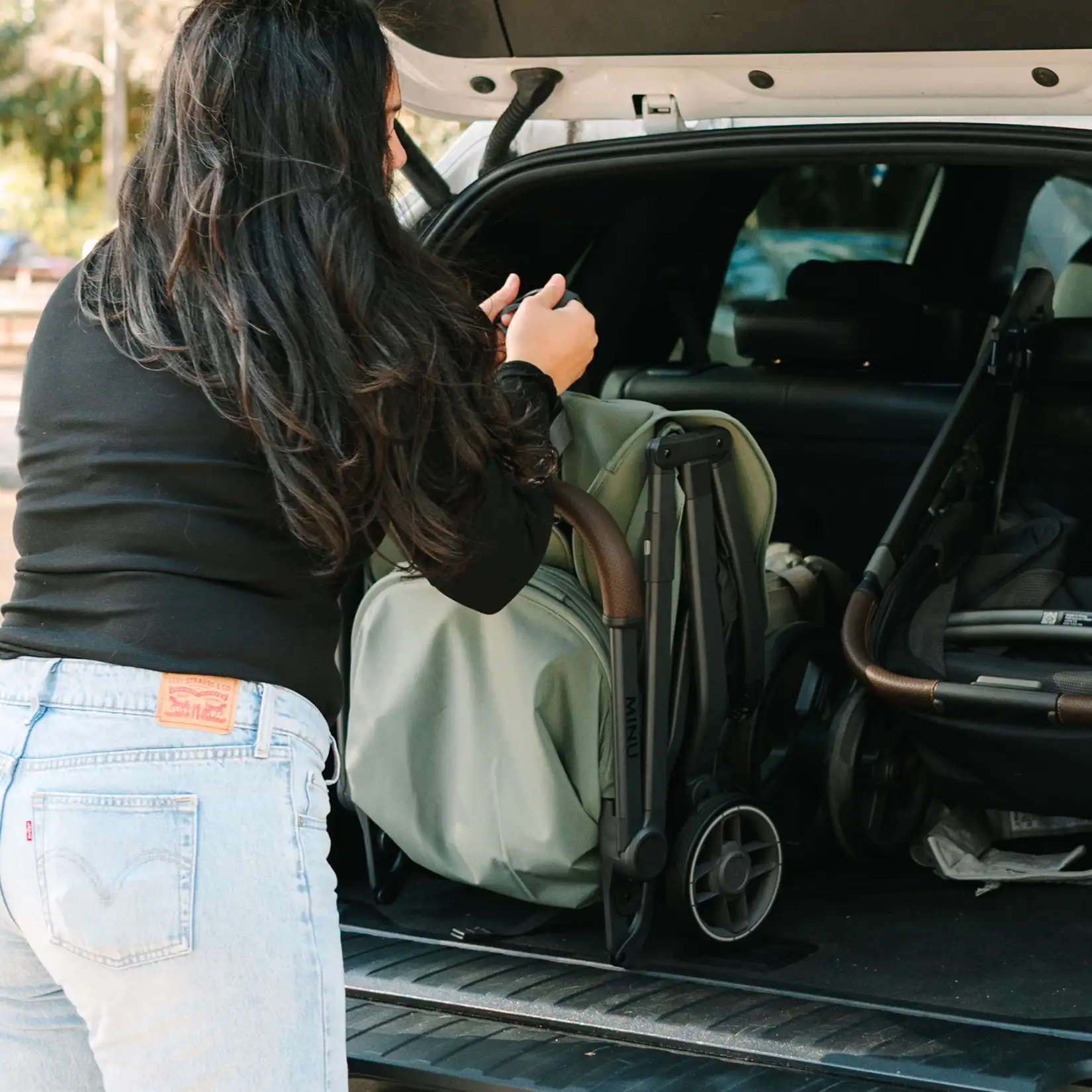
So let’s break down exactly how flying with a stroller works, what “gate-checking” actually means, when a stroller can go in the overhead bin, and what to look for if you’re buying a stroller specifically for air travel.
Yes, You Can Usually Bring a Stroller to the Airport
For most airlines, traveling with a stroller is completely normal. Major US airlines generally let parents check a stroller without treating it like a normal piece of paid baggage.
Delta, for example, says strollers and child safety seats can be checked free of charge, either before security or at the gate, and they don’t count toward your normal baggage allowance (Delta’s child baggage policy). American Airlines similarly allows a stroller and car seat to be checked free when traveling with a child, though its exact rules depend on the stroller’s type and size (American’s traveling-with-children policy).
So the real question usually isn’t “Can I bring a stroller?” - it’s “Where is my stroller going to spend the flight?” There are three main possibilities.
Option 1: Take the Stroller Into the Cabin
This is the dream scenario for a lot of traveling parents: push your child through the airport, fold the stroller when you board, put it in the overhead bin, and get it right back when you land. No baggage handlers, no waiting at the jet bridge, no wondering whether it made your connection.
But only very compact travel strollers have a realistic shot at this. American’s current conditions state that a fully collapsible stroller under 20 lb may be carried onboard if it fits in the overhead bin - though available overhead space and aircraft type can still affect whether it’s accepted (American’s Conditions of Carriage).
“Cabin approved” does not mean guaranteed. You’ll see stroller manufacturers use phrases like “cabin approved,” “overhead compatible,” “airline friendly,” “IATA compatible” or “carry-on size.” Those claims can be useful, but there’s no single dimension every airline and every aircraft in the world has agreed to accept - a stroller can fit one airline’s published limits and exceed another’s.
And even if it technically fits, a gate agent may still ask you to check it if the flight is full, the overhead bins are already packed, you’re on a smaller regional aircraft, that airline has a specific stroller policy, or the stroller is simply treated differently from ordinary carry-on baggage. That’s why we treat overhead compatibility as a fit question, not a universal “approved” label - you can check any stroller’s actual folded dimensions against every major US and Canadian carrier at once with our Will It Fit tool, instead of relying on a manufacturer’s badge.
Why parents care so much about overhead fit
- You get it back immediately after landing - especially useful during connections.
- There’s less opportunity for damage; a stroller that never enters the baggage system can’t be thrown onto a cart.
- There’s less risk of it ending up somewhere else, and you always know exactly where it is.
That can make an ultra-compact travel stroller - something like the CYBEX Libelle, one of the smallest folds we track - worth paying for if you fly regularly. But it comes with trade-offs: the stroller with the absolute smallest fold isn’t necessarily the one with the best suspension, deepest recline or biggest basket. That’s one of the reasons choosing a travel stroller gets surprisingly complicated - our comparison tool is built to help you weigh those trade-offs side by side.
Option 2: Gate-Check Your Stroller
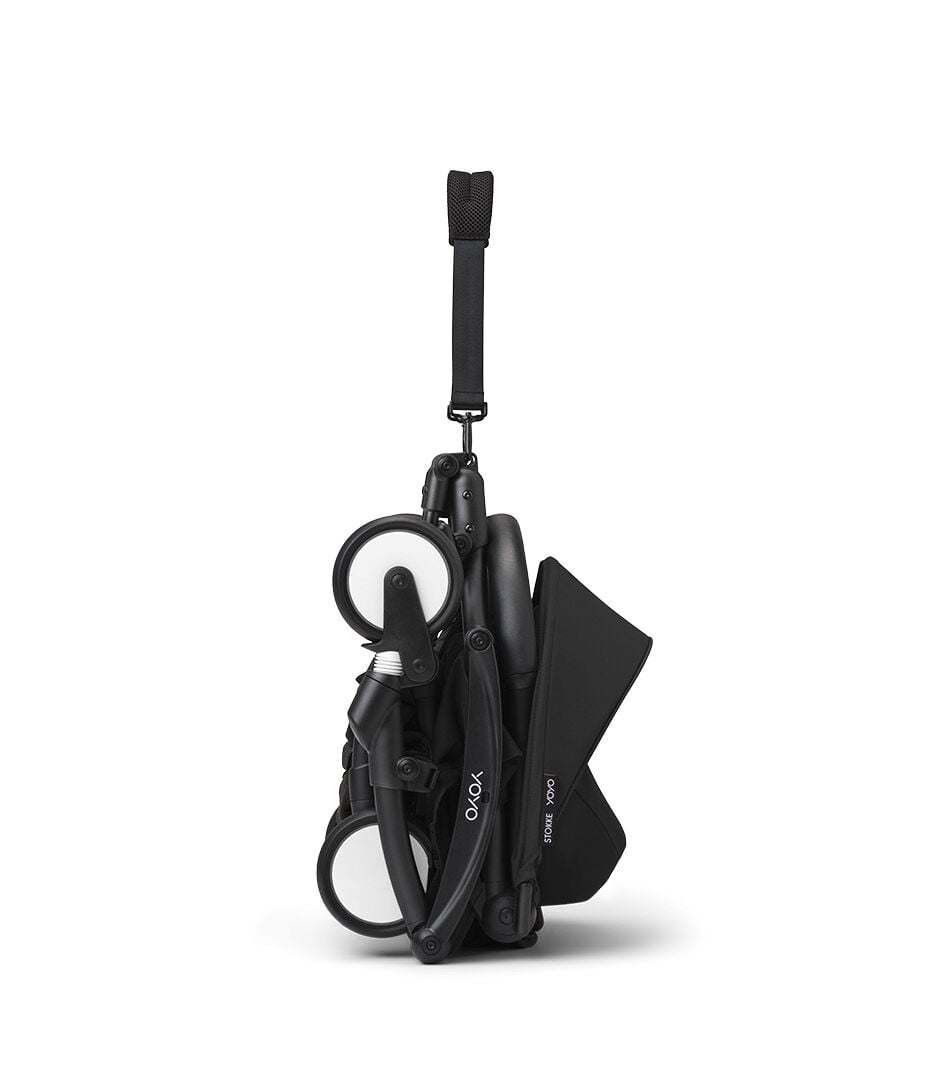
For many families, gate-checking is the sweet spot. Instead of handing the stroller over at the main check-in counter, you keep using it through the airport - through security, to the gate, and hand it over close to boarding. Depending on the airport and airline, you may get a gate-check tag; you fold the stroller and leave it where instructed, often near the aircraft door or the bottom of the jet bridge, and airline staff load it into the cargo hold. At your destination, it may come back at the aircraft door, on the jet bridge, at a special baggage area, or occasionally regular baggage claim - ask the gate agent where you’ll actually receive it.
Delta explicitly allows parents to check a stroller at the gate at no charge (source), and American allows gate-checking for qualifying strollers under its child-travel policy (source).
The big advantage of gate-checking
You keep your stroller for almost the entire airport experience - a huge deal if you have a sleeping baby, a toddler who suddenly decides walking is unacceptable, a diaper bag, carry-ons, bottles, jackets, a car seat, passports and approximately 4,000 other things parents somehow acquire while traveling. Walking through a giant terminal carrying a 25 lb toddler because you checked the stroller two hours ago is not particularly fun.
The downside of gate-checking
Your stroller is still going into the aircraft hold, which means it can get scratched, dirty, bent, damaged, delayed or, less commonly, lost. Parents traveling with expensive strollers often use a padded travel bag for exactly this reason. At a minimum, remove anything detachable before handing it over - cup holders, organizers, toys, snack trays, rain covers and loose accessories have a remarkable ability to disappear during air travel.
Option 3: Check the Stroller at the Ticket Counter
The third option treats the stroller more like ordinary checked luggage: you hand it over when you arrive and don’t see it again until your destination. For most parents with babies and toddlers, this is the least convenient option, but sometimes it makes sense - if you have a very large full-size stroller or a stroller wagon, the airline requires it because of its size, your child is old enough to comfortably walk through the airport, or you simply don’t want another item to deal with at the gate.
American, for example, says non-collapsible strollers and certain stroller wagons must be checked at the ticket counter (source). If you know from the start you’ll be checking it, a protective bag becomes even more worthwhile.
Does a Stroller Count as Your Carry-On?
Often, no - but don’t assume that means every stroller can come into the cabin. This confuses a lot of parents. An airline may exempt a stroller from your normal baggage allowance while still requiring it to travel in the cargo hold. American explicitly lists strollers among items that don’t count as a passenger’s ordinary carry-on or personal item (source), and Delta treats checked strollers separately from normal baggage allowances too. That doesn’t mean you can bring a full-size stroller onboard and place it wherever you want - it still needs to comply with the airline’s rules for handling child equipment.
Can You Take a Stroller Through Airport Security?
Usually, yes. If you’re gate-checking or taking it onboard, you’ll normally bring it through the security checkpoint with you. Be ready to take your child out, remove bags and loose items, fold the stroller, put it through the screening equipment if it fits, and follow the security officer’s instructions if it doesn’t.
This is another area where one-hand folding stops sounding like a marketing gimmick and starts sounding very useful. Imagine holding a baby while trying to collapse a stroller, remove a diaper bag and keep track of your phone and boarding pass - that’s the real-world test, and it’s exactly why a stroller like the Joolz Aer² is built to fold with one hand and stand on its own once collapsed.
What Kind of Stroller Is Best for Flying?
If you’re shopping specifically for a travel stroller, don’t look at folded size alone. Here’s what we’d actually weigh.
1. Folded dimensions
If the overhead bin matters to you, this is critical. Compare the stroller’s actual folded dimensions against your airline’s published carry-on limits - don’t rely only on a “cabin approved” badge. Our Will It Fit tool checks any three dimensions against every major carrier at once.

2. Weight
The difference between a 10 lb stroller and a 17 lb stroller sounds small in a spec table. It feels considerably larger when you’re carrying the stroller, your baby, a backpack and a suitcase up a set of stairs at a train station in Europe. The gb Pockit Air All-Terrain, at 10.4 lb, is one of the lightest options we track.
3. One-hand fold
If you expect to travel alone with your child, rank this highly. Some compact strollers fold almost instantly with one hand; others technically fold small but need several steps and both hands. Those are very different experiences at a gate.
4. Recline and nap comfort
A stroller can be great at fitting in an overhead bin and mediocre as a place where your child spends three hours exploring a new city. If your baby naps in the stroller, recline matters far more once you’re actually on the trip - the Nuna TRVL lx, for instance, includes a built-in carriage mode specifically for this.
5. Newborn compatibility
“Works with newborns” can mean several different things: the seat itself is suitable from birth, the stroller has a dedicated newborn mode, you need a separate bassinet, you need an infant car seat, or the normal seat is only appropriate from around 6 months. Don’t treat those as the same thing - the Bombi Bēbee V3 is a budget-friendly example that’s lie-flat and newborn-ready out of the box.
6. Wheels and suspension
Airports have wonderfully smooth floors. European cobblestones do not, and neither do cracked sidewalks, gravel paths or old city streets. There’s usually a trade-off between the tiniest folded size and ride quality - the Ergobaby Metro 3 is a newborn-ready option that also adds all-wheel suspension for exactly this reason.
7. How you’ll use it after the flight
Ask yourself: is this only an airport stroller, or is it going to be your stroller for the whole vacation? Those are very different requirements. A stroller that’s wonderful for boarding may be annoying if you’re pushing it eight miles a day for two weeks - worth comparing a couple of candidates against each other in our comparison tool before you decide.
Should You Buy a Special Travel Stroller Just for Flying?
Not necessarily. If you fly once every couple of years and already own a stroller you love, gate-checking it may make a lot more sense than buying another one. But a dedicated travel stroller starts making more sense if you fly frequently, take connecting flights, travel solo with your child, use public transportation while traveling, frequently visit cities, have limited trunk space, or want something dramatically lighter than your everyday stroller. The key is finding the right balance for your trips, not simply buying whichever stroller folds smallest.
So, Do You Have to Check a Stroller When Flying?
Not always. The simplest way to think about it:
- Very compact stroller, an airline that allows it, and overhead space available - you may be able to take it into the cabin.
- Collapsible stroller you’re using through the airport - you can often gate-check it for free.
- Large or non-collapsible stroller - you may need to check it at the ticket counter.
Airline policies change, aircraft differ, and airport staff ultimately apply the airline’s rules on the day you travel. If keeping the stroller with you is important, verify the current policy directly with your airline before departure.
Choosing a Travel Stroller? Start With How You Actually Travel
There isn’t one “best travel stroller” for every family. A parent flying alone with a 10-month-old who naps constantly has completely different needs from someone traveling with a 3-year-old who only uses the stroller when tired - and a family spending two weeks on cobblestone streets shouldn’t necessarily optimize for the same stroller as someone flying to visit grandparents twice a year.
That’s why we built StrollerSelect. Instead of another generic “10 best travel strollers” list, our six-question finder looks at your child’s age, your budget, how often you fly, whether overhead-bin fit matters, whether your child naps in the stroller, the surfaces you’ll use it on, and newborn compatibility - then narrows down the options that actually make sense for your trip.