ARTICLES
How to Choose a Travel Stroller: 10 Things to Look For Before You Buy
Buying a travel stroller sounds simple until you actually start comparing them. Then suddenly you’re looking at folded dimensions, suspension systems, recline angles, carry straps, car-seat adapters, basket sizes, newborn kits, airline claims, one-hand folds and about 30 different versions of the phrase “ultra compact.” And somehow every stroller is “perfect for travel.”
It isn’t. A great travel stroller is not just a smaller stroller - it’s a stroller that makes your specific kind of travel easier. For one family, that means fitting in an airplane overhead bin. For another, it means surviving cobblestones in Rome. For someone traveling alone with a baby, it might mean folding the stroller with one hand while holding a child in the other. And for parents of a newborn, the biggest question may simply be: can I even use this stroller yet?
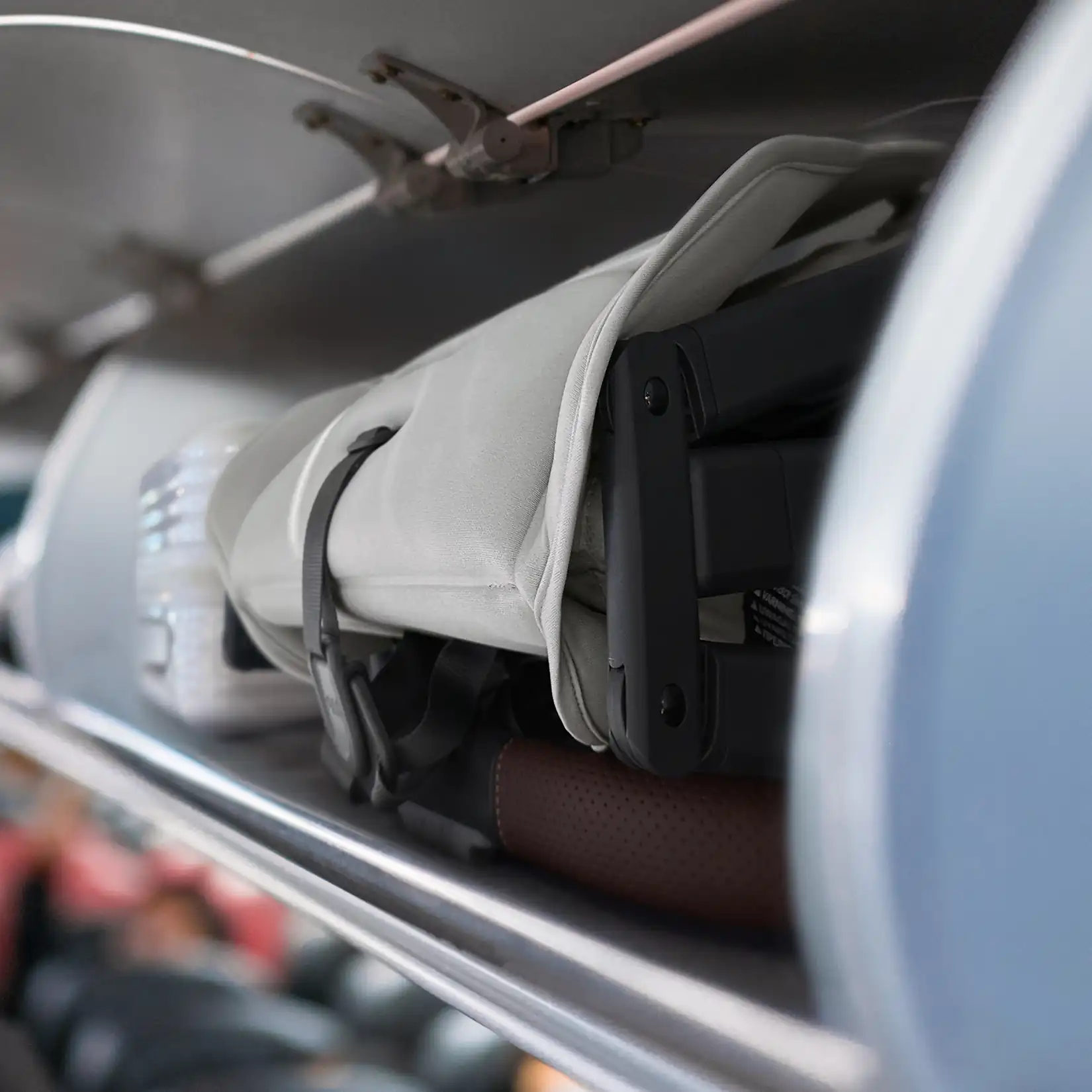
This guide walks through the 10 things we think matter most when choosing a travel stroller - plus a few things that matter much less than stroller marketing would have you believe.
Start With One Question: What Kind of Travel Are You Actually Doing?
Before comparing brands, start with your trip. Are you flying frequently, or taking one big international vacation? Traveling mostly by car, or visiting cities with trains and public transportation? Walking all day, or dealing with rough sidewalks and cobblestones? Traveling alone with your child? Bringing a newborn? Trying to replace your everyday stroller, or buying a second one purely for trips?
These answers can completely change what “best” means. A stroller optimized for airports can be frustrating on rough streets. A stroller that rides beautifully may be too large for cabin storage. A super-light stroller may save your shoulder in the terminal but offer nowhere comfortable for your toddler to nap.
That’s why we’d never start with “Which travel stroller is best?” We’d start with “Which travel stroller fits how you travel?” - which is exactly what our six-question finder is built to answer.
1. Check the Folded Dimensions, Not Just the Word “Compact”
This is one of the biggest mistakes parents make when shopping for a travel stroller. Almost every travel stroller is marketed as compact - that doesn’t mean they’re remotely the same size when folded.
The CYBEX Libelle, for example, folds to about 12.6 × 7.8 × 18.9 in and weighs just 13.7 lb, making it one of the smallest serious travel strollers in its class. CYBEX specifically positions it for air travel but still tells travelers to verify their airline’s rules. By comparison, the UPPAbaby Minu V3 folds larger at 21.5 × 18 × 10 in, but gives you more everyday stroller functionality in return. Neither is automatically “better” - they’re solving slightly different problems.
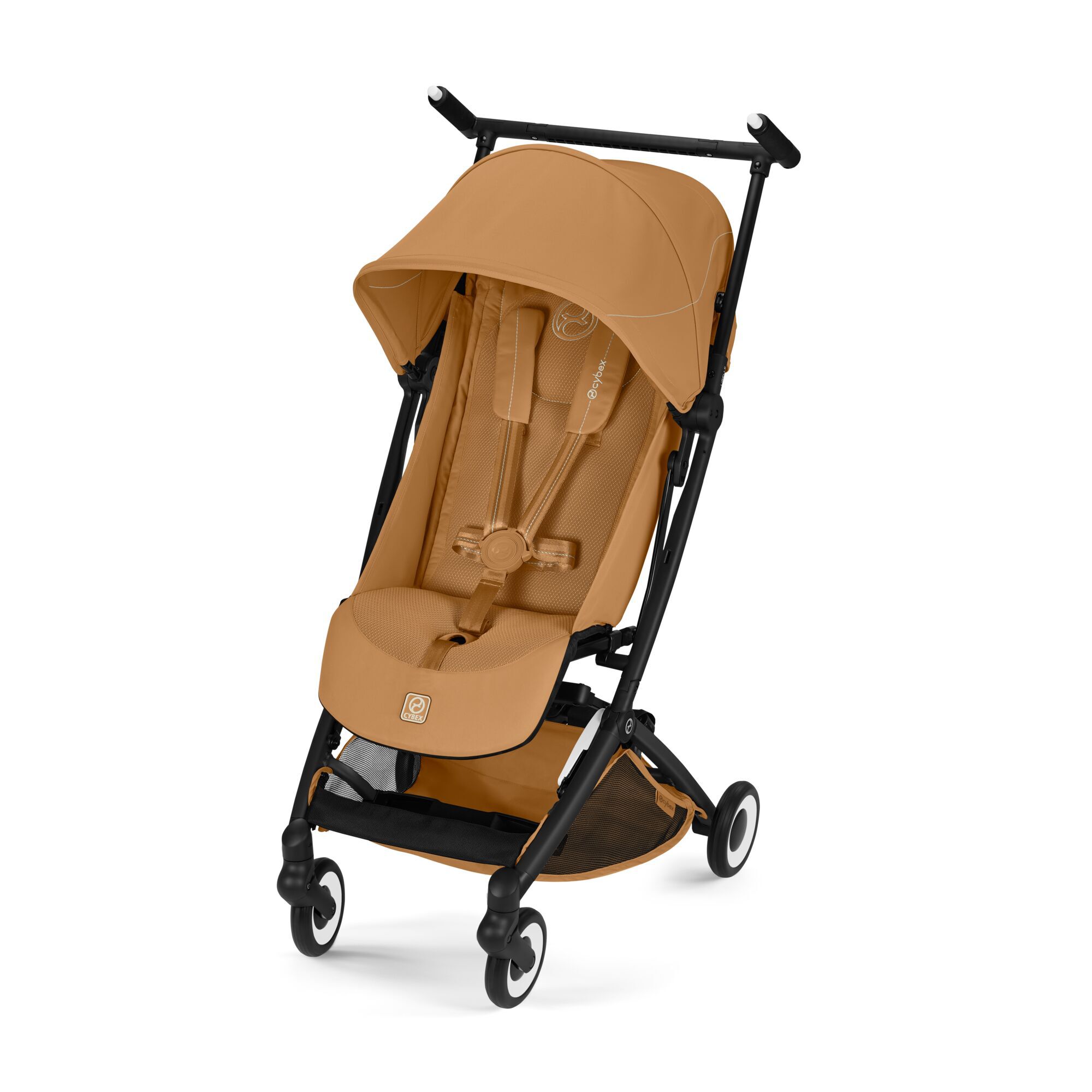
What to look for: folded length, width and height; whether the stroller stands when folded; whether the wheels stick out awkwardly; whether there’s a carry handle or strap.
If flying matters to you, compare those folded dimensions against your airline’s published carry-on limits with our Will It Fit tool - don’t assume “airline approved,” “IATA compliant” or “cabin friendly” guarantees the stroller will be accepted onboard. Airlines set their own policies, aircraft vary, and available overhead space matters.
Our rule: if overhead-bin fit is essential, folded size should be one of your top three buying criteria. If you’re happy to gate-check, it matters much less - our gate-check vs. cabin guide walks through that trade-off in detail.
2. Pay Attention to Weight, but Don’t Obsess Over One Pound
Travel stroller weights vary more than you might expect. A stroller around 10-13 lb feels dramatically different to carry through an airport than a 17-18 lb stroller. But weight isn’t everything.
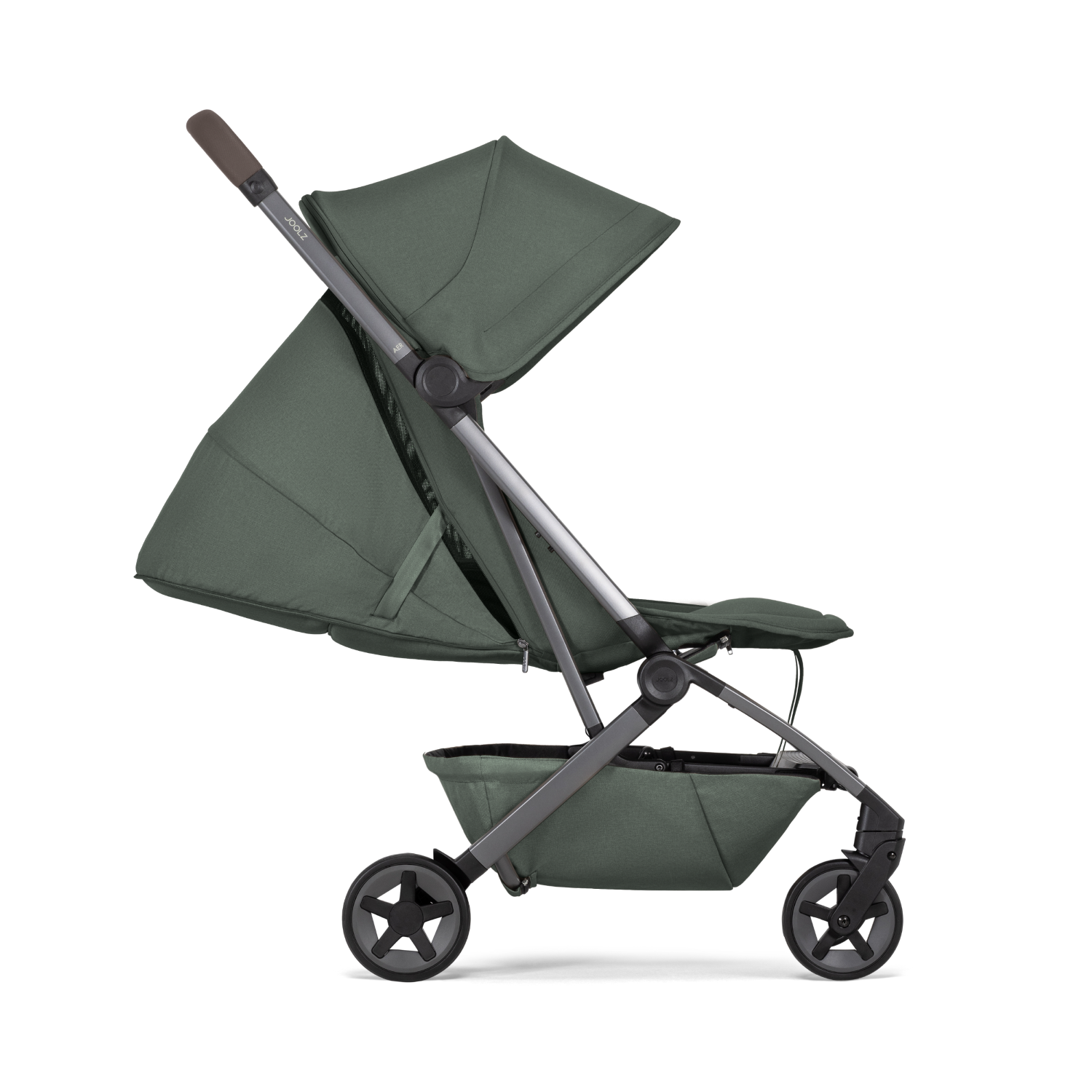
The Joolz Aer², for example, weighs about 14.3 lb and folds compactly while still offering a fairly substantial stroller experience. The UPPAbaby Minu V3 weighs 16.7 lb - noticeably heavier - but gives you a more everyday-oriented feature set and from-birth usability. The Ergobaby Metro 3 is similar at around 17.1 lb, with a larger comfort focus.
Ask yourself this: will you mostly push the stroller, or will you frequently need to carry it while holding your child? That second scenario - airport stairs, train platforms, buses, hotel stairs, boarding the aircraft, rental-car loading, or the moment your toddler decides the stroller is unacceptable - is where every pound matters.
A useful rule of thumb: if you regularly travel alone, place more importance on weight. If two adults are traveling together and the stroller will mostly be pushed rather than carried, comfort may deserve more weight than actual stroller weight.
3. Test the Fold Mechanism in Your Head, Not in a Product Video
“One-hand fold” sounds like a minor feature. It isn’t. Imagine this: you’re holding a baby, you have a backpack on, your boarding pass is open on your phone, people are waiting behind you, and someone has just told you to fold the stroller. Now ask: can I actually do this with one hand?
Some strollers genuinely fold in one motion - Joolz describes the Aer² as a one-hand, one-second fold, and UPPAbaby similarly describes the Minu V3 as having a one-handed compact fold. Other very compact strollers require multiple actions. That isn’t necessarily a dealbreaker, but it becomes much more annoying when you’re traveling alone.
Look for: a true one-hand fold, whether it locks automatically, whether it stands when folded, how easy it is to unfold, whether the seat needs adjusting before folding, and whether accessories must be removed first. A stroller that folds tiny but takes 25 seconds and both hands can be less convenient than one that folds slightly larger but instantly.
4. Decide How Important Nap Comfort Is
This is one of the most underrated travel-stroller questions. Parents often focus so heavily on the airport that they forget about the other 95% of the trip. If your child naps in the stroller, recline matters - a lot. Imagine walking around Paris for six hours with a toddler who missed their nap because the travel stroller barely reclines. Suddenly saving three inches of trunk space doesn’t seem so important.
Look for: a deep, near-flat or flat recline; an adjustable leg rest; a supportive seat; decent canopy coverage and ventilation; and enough seat length for older toddlers. If naps are central to your vacation survival strategy, give comfort a much higher priority.
5. Understand What “Newborn Compatible” Actually Means
This phrase is dangerously vague. Two travel strollers can both be described as suitable for newborns while requiring completely different setups. Newborn use can mean the seat itself works from birth, the seat converts into a newborn mode, you need a separate bassinet, you need a newborn insert, you need an infant car seat, or the standard seat is actually 6 months+. Those are not the same thing.
Before buying, check: the minimum age, whether the regular seat works from birth, whether an accessory is required and how much it costs, whether the stroller still folds normally with that setup, and whether you actually want to travel with a bassinet or infant seat. This is especially important if you’re buying a stroller while pregnant or for a baby under 6 months.
6. Think About the Destination, Not Just the Airport

Airport floors are basically ideal stroller terrain: smooth, flat, climate controlled. Then you arrive in Europe - cobblestones, curbs, broken sidewalks, train tracks, gravel, old-town streets. Suddenly wheel size and suspension matter.
Smaller wheels usually mean easier folding, but also more vibration, more difficulty over uneven surfaces, and worse performance over cracks and curbs. Larger wheels and better suspension usually mean a smoother ride and easier pushing, but typically more weight and larger folded dimensions. This is one of the fundamental travel-stroller trade-offs: for airports, malls, theme parks and modern cities, you can prioritize compactness more aggressively; for Europe, cobblestones, old towns and mixed terrain, we’d favor a slightly more substantial stroller like the Ergobaby Metro 3 or a model with all-wheel suspension.
7. Don’t Ignore the Basket
Traveling with children involves an astonishing amount of stuff - diapers, water bottles, snacks, extra clothes, blankets, sunscreen, toys, your own jacket, and whatever random object your toddler has decided is essential to their survival. A tiny basket sounds like a minor inconvenience until you spend an entire day carrying a diaper bag because nothing fits underneath the stroller.
Check: basket weight capacity, basket opening size, whether it’s accessible when the seat is reclined, whether a diaper bag actually fits, and whether the frame blocks larger items. If your stroller is only for airports, basket size may be secondary. If it will be your main stroller throughout the trip, storage becomes much more important.
8. Make Sure the Seat Will Still Fit Your Child Next Year
Travel strollers often look roomy in marketing photos because there’s a 12-month-old sitting in them. That doesn’t tell you how your 3-year-old is going to fit. Pay attention to seat-back height, canopy clearance, maximum child weight, leg-room, footrest position and seat width - weight limit alone doesn’t guarantee comfort, and a tall toddler may technically be under the weight limit but still look cramped.
This matters most if your child is already 2+, you have a tall child, you expect to use the stroller for several years, or you’re spending $400-$600+.
9. Decide Whether This Is a Travel Stroller or Your Stroller
This decision can simplify the entire buying process. There are two very different approaches.
Approach A: a dedicated travel stroller. You already have a big everyday stroller at home, and you want something that lives in the trunk, goes on flights, folds tiny, stays lightweight and gets used occasionally. In that case, you can tolerate more compromises - a smaller basket or lighter suspension may be completely fine.
Approach B: one stroller for everything. You want one stroller that travels well, handles errands, goes on walks, carries groceries, gives your child a comfortable nap and works every week. Now ride quality, storage, durability and comfort become much more important.
There’s no right answer, but deciding which category you fall into will prevent you from overpaying for features you don’t need, or buying something too compromised to use every day.
10. Set a Real Budget Before You Fall in Love With One
Travel strollers range from well under $200 to well over $500, and yes, expensive strollers can be excellent - but more expensive doesn’t automatically mean better for your trip. You’re often paying for combinations of lighter materials, stronger folding mechanisms, better suspension, nicer fabrics, better wheels, more polished design, accessory ecosystems and brand reputation.
The real question is which of those things matter to you. If you fly once every 18 months, a $600 stroller may be unnecessary. If you fly every month, travel alone, and use the stroller daily at your destination, that same $600 purchase might be easy to justify. Instead of asking “is $500 expensive for a stroller?” ask “how often will I use this, and which frustrations does the extra money actually solve?”
The Features We’d Prioritize by Type of Traveler
| Your situation | Prioritize |
|---|---|
| Frequent flyer | Folded size, weight, cabin fit |
| Solo parent | One-hand fold, weight |
| Newborn | From-birth setup, recline |
| Toddler | Seat size, max weight, nap comfort |
| Europe trip | Suspension, wheels, weight |
| Theme parks | Comfort, basket, recline |
| One stroller for everything | Ride quality, basket, durability |
| Occasional vacation stroller | Price, compactness |
| Public transportation | Fold, weight, standing fold |
| Long sightseeing days | Comfort, canopy, recline, storage |
What About “Airline Approved” Travel Strollers?
Be skeptical of the phrase. Some manufacturers publish very small folded dimensions and explicitly position their products for cabin use. Joolz markets the Aer² as IATA-compliant with a folded size of roughly 20.9 × 17.3 × 9.2 in. UPPAbaby describes the Minu V3 as overhead-friendly with IATA-compatible dimensions. CYBEX says the Libelle is compact enough for hand luggage on many airlines but explicitly tells customers to verify with their airline first.
That last part is the right way to think about it. There is no universal pass that guarantees a stroller goes onboard every flight. Always compare the stroller’s folded dimensions against the airline’s published limits - our Will It Fit tool does this for every major US and Canadian carrier at once - and remember that available cabin space can still affect what happens at boarding.
The Biggest Travel Stroller Mistakes We See
- Buying the smallest stroller automatically. Tiny is useful. Tiny is not everything.
- Ignoring nap comfort, especially with babies and younger toddlers.
- Buying a 6-month+ stroller for a newborn. Always check the actual configuration.
- Believing every “cabin approved” claim. Verify dimensions yourself.
- Ignoring the destination. Rome is not an airport terminal.
- Focusing only on stroller weight. Fold mechanism and carryability matter too.
- Forgetting about storage. Someone has to carry the diaper bag.
- Buying for today’s baby only. Think about how the stroller will fit six or twelve months from now.
So, What Makes the Best Travel Stroller?
For most parents, we think the ideal travel stroller balances five things: compact enough to travel easily, light enough to carry when needed, comfortable enough for the destination, easy enough to fold under pressure, and appropriate for your child’s age.
Everything else depends on your specific trip. The smallest stroller isn’t always best. The most expensive stroller isn’t always best. And the stroller with the most features definitely isn’t always best. The right one is the stroller whose compromises line up with the compromises you’re actually willing to make.
That’s why we built StrollerSelect. Instead of ranking every family the same way, our finder looks at your child’s age, your budget, whether you fly frequently, whether overhead-bin fit matters, how important naps are, where you’ll use the stroller, whether you travel alone, and how much portability matters - then narrows the options based on your actual priorities.
Frequently Asked Questions
How much should a travel stroller weigh?
There isn’t one perfect number, but many popular compact travel strollers fall roughly in the 10-17 lb range. If you expect to carry the stroller frequently, lighter becomes more valuable. If it will mostly be pushed, a few extra pounds may be worth it for better comfort and suspension.
Is a 16 lb stroller too heavy for travel?
No - a 16 lb stroller is still significantly lighter than many full-size strollers. But it can feel heavy if you’re simultaneously carrying a child and luggage.
Do I need a stroller that fits in an airplane overhead bin?
Not necessarily. Gate-checking works perfectly well for many families. Cabin fit becomes much more valuable for frequent flyers, tight connections and parents who want to minimize baggage handling.
What is the best travel stroller for a newborn?
Look for a stroller that is genuinely suitable from birth, either through the regular seat or a clearly defined newborn configuration. Do not assume every compact stroller works for newborns.
Is a travel stroller worth buying?
It can be if your everyday stroller is heavy, bulky or difficult to transport. Frequent travelers often get much more value from a dedicated travel stroller than families who only fly occasionally.
Can a travel stroller replace a regular stroller?
Some can. Models with good suspension, comfortable seats, useful baskets and strong everyday features can work as primary strollers. Ultra-compact models usually involve more compromises.